

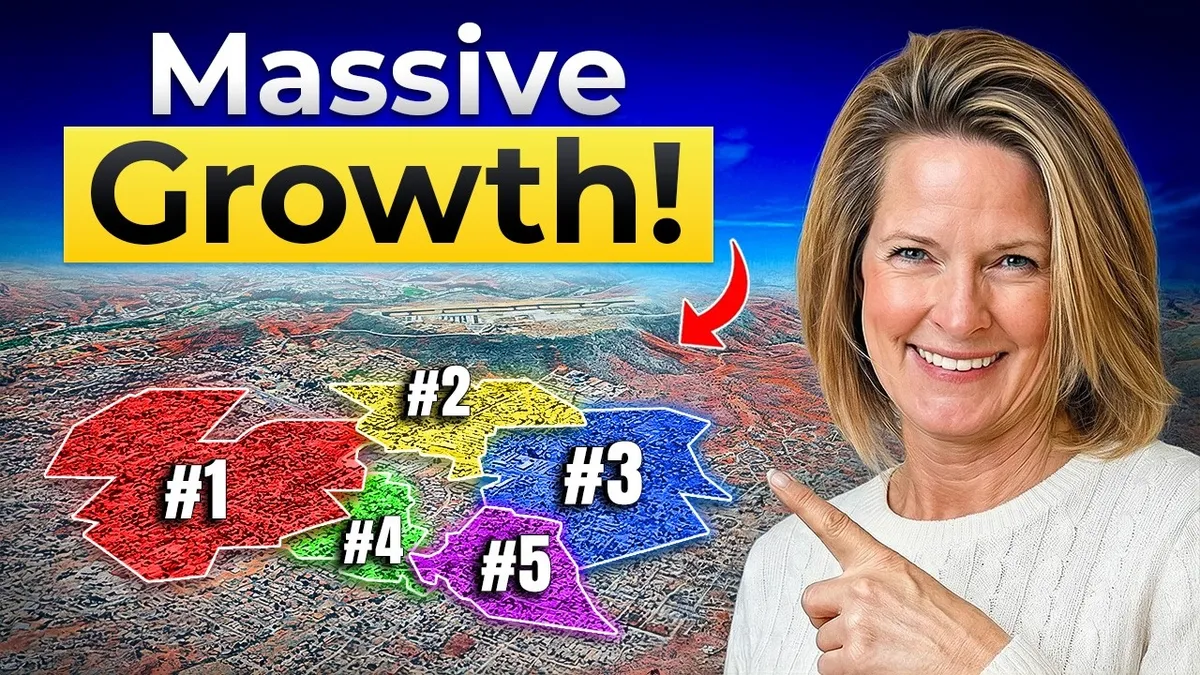
5 Sedona Areas Set to Grow in 2026 (And Who Each One Fits)
Most people assume Sedona's growth in 2026 will hit every nearby town the same way. It won't. The momentum is concentrated in a few specific areas where road projects, planning decisions and limited supply are all stacking up at the same time. Growth is happening, just not evenly.
I'm Cami Goucher, and my husband Greg and I help buyers and sellers throughout Sedona and the Verde Valley. Our job is to be straight with you about what it's actually like to live here day to day, not just what it's like to visit. Here are the five areas with the strongest real growth signals, what's driving demand in each one, and who each area fits best.
▶ Prefer to watch? Watch the full video on YouTube and subscribe to LIVIN In Sedona for a new Sedona video every week.
The Short Version
Each of these areas is growing for a different reason. The right one for you depends on how you want your daily life to work.
West Sedona: the access-upgrade story. New roads and roundabouts are making daily life easier.
Village of Oak Creek: the gateway story. Steady demand on the main approach into Sedona.
Uptown Sedona: the core story. The highest-demand area, with the city investing to make it work better.
Cornville: the space-and-calm story. Room to spread out, with the county planning for growth.
Cottonwood: the practical-hub story. The Verde Valley's daily-life center.
#1: West Sedona — The Access Upgrade
West Sedona is one of the fastest-growing parts of Sedona, but not because of new rooftops. Its growth story is circulation: how daily life actually moves.
What's driving it. When a city goes after its biggest bottleneck, like the "Y" intersection, it's usually because it expects that area to carry long-term demand from both residents and visitors. The State Route 89A and Forest Road roundabout project is designed to improve traffic flow and reliability around the Y, with a strong emphasis on emergency access. It even calls for a dedicated bus lane so transit can reach a planned transit hub. That's a clear signal the City of Sedona is working to make West Sedona function better for people who live here full time.
The Forest Road Connection Project recently finished its first phase: a new two-lane road connecting the end of Forest Road to a new intersection on 89A just west of the Y roundabout. The next phase is planned to add another roundabout and extend Forest Road south of 89A. Together, these improvements put you closer to groceries, medical services and the everyday routines that matter when you live here.
What you'll find. Mostly established neighborhoods and resale homes, some updated, with certain streets in higher demand because of access, and the views don't hurt either. You're not buying a brand-new subdivision here. You're buying an established area where road upgrades are doing the heavy lifting.
Who it fits. Full-time relocators who want Sedona but need logistics to work, buyers who want reliable routes to services and medical care without living inside Uptown traffic, and buyers planning to hold long term.
The trade-off. Construction timing matters. The benefits are real and they're coming, but how much construction affects you varies street by street during the rollout.
#2: Village of Oak Creek — The Gateway
The Village of Oak Creek grows for a completely different reason. It isn't driven by new projects. It's driven by gateway demand on the main approach into Sedona.
What's driving it. The Village sits on Sedona's south gateway along State Route 179. When an area lives on the primary approach corridor, demand stays steady because it's tied to access, views and lifestyle, not construction cycles. State and regional planning treat SR 179, SR 89A and SR 260 as one connected system, and transit planning keeps coming back to this corridor as a core route in and out of Sedona.
What you'll find. A mix of established neighborhoods, golf communities and HOA communities, depending on where you are in the Village. Because you're near I-17, getting in and out is quicker than from deeper inside Sedona. The Village often feels calmer than Uptown.
Who it fits. Buyers who want red rock living and trail access without driving into the busy Sedona core, buyers who want easier trips to Flagstaff, Phoenix or the airport, and second-home buyers who prioritize access over walkability.
The trade-off. You're on the gateway corridor, so seasonal congestion and peak-hour traffic are part of normal life. On a Sunday afternoon, when visitors head back to Phoenix, you'll feel it, because you're sitting in it. Traffic can affect errands more than people expect.
Street selection matters. Two homes that look close on a map can live very differently. I worked with a couple comparing homes in the Village with homes in West Sedona. They fell in love with a house in the Village, so I encouraged them to drive SR 179 into West Sedona during peak times, which was exactly when they'd be taking their daughters to school. That drive helped them decide what mattered most in their daily life: time in the car, or time doing what they actually moved here to do.
#3: Uptown Sedona — The Core
Uptown tightens because it's Sedona's highest-demand core, and the city keeps investing to make it function better.
What's driving it. The city has already completed congestion-relief projects along SR 89A, like the Amara Lane turn lane and additional northbound improvements focused on Uptown. The key signal is that congestion is being treated as an infrastructure problem, not just a seasonal annoyance. That usually means the city expects Uptown to remain Sedona's center of gravity.
What you'll find. You're closest to the shops, dining and galleries that create Uptown's walkable energy. It's convenient and vibrant. Housing inventory is limited, and price is driven heavily by location, views and proximity to the core.
Who it fits. Buyers who want a location experience, and buyers holding long-term investments where being in the center of it all supports consistent short-term rental demand. (Always check the city's short-term rental rules for any property you're considering.)
The trade-off. You're paying for the lifestyle, not just the house. Congestion and visitor traffic are part of daily life, especially in busy season, and you have to be willing to accept that.
#4: Cornville — Space and Calm
Cornville is driven by space, calm and a slower daily rhythm.
What's driving it. Cornville isn't a Sedona subdivision. It's one of the communities just outside Sedona that make up the Verde Valley, which is known for its wine country, and Cornville benefits from that destination demand. Yavapai County has a formal vision and comprehensive plan guiding how growth happens here, which tells you growth is intentional, not random. The county has also scheduled construction on a new roundabout at Cornville Road and Tissaw Road. The area is growing, and the county is preparing for it.
What you'll find. Fewer traditional residential neighborhoods and more room to spread out. In some areas, you can see Sedona in the distance.
Who it fits. Buyers who want privacy without being too remote, and buyers looking for a quieter, long-term lifestyle.
The trade-off. Convenience. No matter where you live in Cornville, you'll drive to Sedona or Cottonwood for groceries or a nice dinner out. There are a few mom-and-pop spots locally, but for most errands you're making a trip. Road conditions and infrastructure will matter more and more as development continues.
#5: Cottonwood — The Practical Hub
Cottonwood is the daily-life center of the Verde Valley.
What's driving it. Cottonwood works as a real home base, with services, dining and a true Main Street experience, while keeping Sedona within reach. The city has an active economic development strategy and an updated general plan, both signals of long-term, intentional growth. Old Town Cottonwood is a measurable demand driver, especially for buyers who want walkability and community energy. It's been upgraded into a hub that draws locals as well as visitors.
What you'll find. All the major conveniences that make life easier. Errands are simpler, dining is close, and the hospital is close. Life feels more town-based. Housing ranges from older homes in established neighborhoods to newer homes in areas with more space.
Who it fits. Buyers who want Verde Valley living with fewer daily friction points, buyers who want an active small-town scene, and buyers who see Sedona as a nearby bonus rather than the center of everything.
The trade-off. You're not in Sedona. Street selection matters here too, and weekend activity near Old Town is real.
Frequently Asked Questions
Which Sedona-area towns are growing fastest in 2026?
The strongest growth signals are in West Sedona, the Village of Oak Creek, Uptown Sedona, Cornville and Cottonwood. Each is growing for a different reason, from road upgrades in West Sedona to planned, county-guided growth in Cornville.
What road projects are changing West Sedona?
The State Route 89A and Forest Road roundabout project and the Forest Road Connection Project. The first phase of the Forest Road connection is complete, and the next phase is planned to add another roundabout and extend Forest Road south of 89A.
Is the Village of Oak Creek a good option for second-home buyers?
It can be, especially if you value quick access to I-17, Phoenix and the airport over walkability. Just plan for seasonal traffic on SR 179, and test-drive your regular routes at peak times before you buy.
Where should I live if I want convenience near Sedona?
Cottonwood is the Verde Valley's practical hub, with services, dining, a hospital and a walkable Old Town, while Sedona stays a short drive away.
Is Cornville too remote?
It depends on your lifestyle. Cornville offers space, privacy and calm, and in some areas you can even see Sedona. But you'll drive to Sedona or Cottonwood for groceries and most dining.
Let's Find the Area That Fits Your Goals
Growth looks different in every one of these areas, and the right choice depends on your goals, your budget and how you want daily life to feel. Whether you're planning a move, buying a second home or looking to invest, here's how to start:
Find your area: Take the 2-minute Sedona Area Quiz
Compare neighborhoods: Get the free 30-Neighborhood Spreadsheet
Learn the area: Download the free Sedona Relocation Guide
Talk it through: Book a free call with Cami and Greg
Watch the video: See the full breakdown on YouTube
All stats, project details and information are subject to change and are provided as examples at the time of recording (early 2026).
Cami Goucher, LIVIN In Sedona · Coldwell Banker Realty
